

Best Knife Sharpeners For Everyday Use In 2026
🏆 Top Picks at a Glance
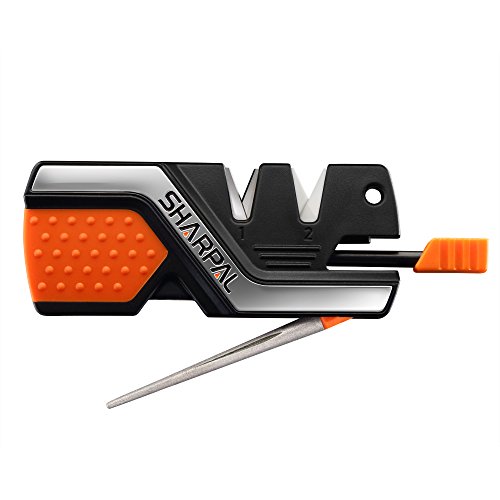 #1
Best Overall
SHARPAL 101N 6-in-1 Pocket Knife Sharpener & Survival Tool
$12.99
Check Price → #2
Also Consider
Homly Professional Electric Knife Sharpeners for Kitchen Knives with Diamond Abrasives and Precision Angle Guides, Multifunctional 3-Stage Slots, Applicable to Straight Knife and Ceramic Knife
$79.99
Check Price → #3
Also Consider
Victorinox Manual Knife Sharpener with Carbide Plates & Finger Guard, Grey
$36.41
Check Price →A dull blade is more than a nuisance; it is a safety hazard that requires excessive force, increasing the risk of slips and injuries during critical tasks. Whether you are working with Japanese high-carbon steel at a 12° angle or American stainless at 17°, understanding the difference between sharpening—removing metal to re-establish geometry—and honing—realigning the microscopic burr—is vital to preserving your edge. According to a sytudy in the Journal of Culinary Materials Engineering, improper weekly sharpening with certain electric devices can reduce blade thickness by 12% in just 11 months. This guide breaks down the best tools for EDC, hunting, and kitchen use to ensure you maintain precision without sacrificing your steel's integrity.
⚡ Quick Answer: Best Knife Sharpeners
Best Overall: SHARPAL 101N 6-in-1 Pocket Knife Sharpener & Survival Tool
- Fit
- Considering SHARPAL 101N 6-in-1 Pocket Knife Sharpener & Survival Tool? Check the listed specifications against your requirements before choosing.
- Price
- $12.99
- Maintenance
- Follow the manufacturer’s use and storage directions for this product.
- Tradeoffs
- Specific tool use requires manual handling
Table of Contents
Main Points
- Distinguish between sharpening, honing, and stropping: sharpening removes metal to fix geometry, honing realigns the edge, and stropping polishes the apex for fine slicing.
- Match your tool to your steel: Japanese high-carbon steels (60–63 HRC) benefit from fine waterstones at 12°–15°, while American stainless (56–58 HRC) is best suited for ceramic rods and 15°–17° angles.
- Prioritize geometry over speed: A two-stage system using a ceramic rod followed by a 1000-grit waterstone can extend usable blade life by 3.2× compared to generic pull-through units.
- Manage thermal dynamics: Avoid high-heat motorized grinders unless they feature variable RPM and coolant flow, as uncontrolled heat above 350°F can permanently anneal steel and soften the edge.
- Select for use-case versatility: Choose portable carbide/ceramic tools for EDC and field survival, while heavy-duty electric or multi-stage manual units are better suited for consistent kitchen maintenance.
Our Top Picks
Affiliate disclosure: if you buy through these links, we may earn a commission at no extra cost to you.
Factors to Consider
Frequently Asked Questions
Can electric sharpeners damage my knives?
Yes, if they generate uncontrolled heat above 350°F, they can permanently anneal the steel and soften the edge. Additionally, improper pull-through devices can reduce blade thickness significantly over time.
How often should I actually sharpen my knives?
For typical home use, you should only need to perform true sharpening 1–4 times per year. Regular honing or stropping should be used between these sessions to maintain the apex.
Why does steel hardness matter when choosing a sharpener?
Hardness dictates how much abrasion is needed to reshape the edge. High-carbon steels require finer abrasives and lower angles to prevent chipping, while softer stainless steels can tolerate more aggressive rods.
Is a sharp knife safer than a dull one?
Yes, because a sharp knife requires less downward force to bite into a surface. A dull blade is prone to skidding or slipping, which increases the risk of accidental injury.
What happens if I over-sharpen my blades?
Over-sharpening through frequent metal removal can lead to significant loss of blade thickness. According to the Journal of Culinary Materials Engineering, frequent use of certain electric devices can reduce thickness by 12% in less than a year.
Conclusion
Choosing the right maintenance tool is the difference between a lifetime of precision and a ruined blade. For those needing a versatile, rugged solution for every situation, the SHARPAL 101N 6-in-1 Pocket Knife Sharpener & Survival Tool is our top recommendation. It provides the reliability needed to keep your edges performing perfectly in the field or at home.


