

How To Choose The Right Folding Knives 2026
Choosing a folding knife is not about picking the sharpest blade on the rack. It is about matching a pivoting tool to the materials, loads, weather, carry conditions, and maintenance you will actually face, because the wrong blade thickness, grind, or handle can make a technically sharp knife cut poorly or become difficult to control.
Quick Answer
Choose a folding knife by the work it must perform, then verify its lockup, steel, edge geometry, handle fit, and carry restrictions. For everyday pocket and EDC cutting, a compact folder with reliable blade control, corrosion-resistant steel, and a thin slicing grind is usually the most practical choice. If you expect heavy wood processing, hard impacts, extensive game work, or dirty jobs around a pivot, a fixed blade with a secure knife sheath may be the better tool.
Table of Contents
- Quick Answer
- Our Top Picks
- Step 1: Define the Work Before You Compare Knives
- Step 2: Match Steel, Thickness, Grind, and Edge Geometry
- Step 3: Inspect the Lockup, Pivot, and Handle Fit
- Step 4: Test the Knife Against Real-World Use Cases
- Step 5: Carry, Sharpen, and Maintain the Knife
- Frequently Asked Questions
- Conclusion
- Sources & References
Our Top Picks
Affiliate disclosure: if you buy through these links, we may earn a commission at no extra cost to you.


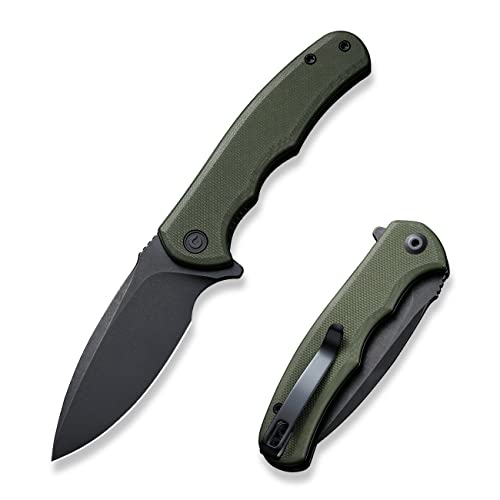
Step 1: Define the Work Before You Compare Knives
Start with the cutting job rather than the knife’s marketing category. Folding knives use a pivoting blade that folds into the handle, which makes them compact for pocket carry and generally removes the need for a separate sheath. That format is excellent for opening packages, cutting cord, trimming loose material, preparing light food, and handling routine EDC work. A fixed blade offers a continuous structure from handle to blade and is often easier to control during heavier cutting, carving, or dirty field work, but it requires a sheath and more deliberate carry.
Think about the consequences of failure. A pocket knife used for cardboard and paracord needs dependable opening, a stable lock, a comfortable clip, and an edge that does not become unpleasant to restore. A hunting folder must also be controllable with wet or slippery hands and easy to clean after contact with blood, fat, or grit. For bushcraft, I generally prefer a fixed-blade bushcraft knife for carving, notching, and sustained wood work; a folding knife can handle light camp chores, but the pivot and lock are not substitutes for a full tang and a properly fitted sheath.
Tactical knives are a heavy-duty subcategory of folding knives intended for high-stress tactical scenarios, but “tactical” does not automatically mean suitable for ordinary pocket carry. If the knife is intended only for daily utility, choose control and practical cutting performance rather than aggressive styling. Klaken Knives reports that more than 68% of outdoor and EDC users choose folding knives over fixed blades for routine, non-heavy-duty cutting tasks. That figure is consistent with the basic reason folders remain popular: they solve common cutting problems without the bulk of a sheathed fixed blade.
Blade length and opening mechanism also affect where you can legally carry a folder. Klaken Knives reports that folding knives with blades under 3 inches are treated as standard EDC tools and legal to carry without special permits in 92% of U.S. states, but municipal rules, workplace policies, restricted locations, and automatic-opening laws can differ. Treat any percentage as a starting point rather than legal advice, and check the current rules wherever you live, work, hunt, or travel.
Step 2: Match Steel, Thickness, Grind, and Edge Geometry
Steel selection is a tradeoff among edge retention, toughness, corrosion resistance, and sharpening effort. With comparable heat treatment and geometry, simpler carbon steels are often straightforward to restore in the field but require more attention around moisture and may develop a patina or rust. Conventional stainless steels are practical for sweat, rain, food residue, and hunting conditions. More wear-resistant stainless steels can hold a working edge longer during abrasive cutting, but they may take more time and a more suitable abrasive on a knife sharpener. No steel name guarantees performance; heat treatment and the maker’s edge geometry matter just as much.
I judge a folding knife by how its edge fails, not only by how sharp it feels on the first day. A tough edge may roll slightly under hard use and can often be brought back with a ceramic rod or fine stone. A very hard, wear-resistant edge may retain its bite through more cardboard or rope but can be slower to sharpen and less forgiving if it is twisted in a cut. Chipping, rolling, and rapid dulling are different problems, so the best steel is the one whose failure mode matches your maintenance habits and field conditions.
Blade thickness controls how the knife moves through material. Thin blade stock with a full-flat or high-flat grind usually slices cardboard, food, cordage, and hide with less wedging. Thicker stock leaves more material behind the edge and can tolerate rougher handling, but it may split or wedge instead of slicing cleanly. A saber grind keeps a stronger shoulder behind the edge but generally cuts with more resistance than a thin full-flat grind. A hollow grind can feel exceptionally keen because it narrows the blade behind the edge, although a very thin edge still needs sensible treatment.
Edge angle completes the picture. A narrow, acute edge can cut efficiently, but it is less tolerant of staples, knots, bone contact, and lateral twisting. A more robust, obtuse edge sacrifices some slicing performance for durability. For EDC, I prefer an edge that is thin enough to cut cleanly but not so delicate that opening a package containing a hidden staple becomes a repair job. For hunting and bushcraft, match the bevel to the material and avoid using the edge as a pry tool regardless of steel type.
Step 3: Inspect the Lockup, Pivot, and Handle Fit
A folding knife must keep the blade open predictably and close without putting your fingers in the edge path. Liner locks, frame locks, back locks, button locks, and other systems can all work well when properly made and maintained; I do not choose a lock by name alone. I look for solid engagement, no unexpected movement, and a release that can be operated without shifting my grip into the blade’s path. Klaken Knives reports that approximately 78% of regular EDC users prioritize locking-mechanism safety over raw blade sharpness, and that is the correct priority in a pocket tool.
Check for blade wobble with the knife clean and the blade open, keeping the cutting edge pointed away from your hands. Klaken’s pre-purchase checklist recommends zero blade wobble under 15 kg of lateral pressure, but an ordinary user should not try to reproduce a heavy load by aggressively forcing the knife. The practical screen is simple: there should be no obvious side-to-side play during a controlled inspection, and the lock should not disengage when the handle is held normally. If a maker provides a specific test procedure, follow that procedure instead of improvising.
The pivot should open smoothly with one hand when the knife is designed for one-handed operation, but it should not swing or deploy unintentionally. A gritty pivot, uneven detent, loose hardware, or blade that drops freely when the handle is moved can indicate poor adjustment or wear. The handle should fill your hand without creating a pressure point, and its texture should remain useful when your hands are cold, wet, or covered by light work gloves. Reinforced aluminum handles can provide a durable, relatively light platform, but contour, traction, and pocket clip placement still determine whether the knife feels secure during real cutting.
Step 4: Test the Knife Against Real-World Use Cases
For EDC and pocket use, the best folder is usually the one that disappears until you need it. A low-profile clip, comfortable closed handle, controlled detent, and blade length that complies with local rules matter more than a dramatic profile. The edge should slice common materials without excessive wedging, and the handle should let you maintain control when cutting away from yourself. If the knife is carried every day, pocket lint and sweat will reach the pivot, so simple cleaning and access to the hardware are practical advantages.
Hunting and field use expose weaknesses that are easy to miss at a desk. A folder can be useful for light trimming, cord, packaging, and backup work, but blood and grit can work into a pivot or lock. Wipe the knife down promptly, clean it according to the maker’s instructions, and dry it before storage. For prolonged game processing, cutting through tough connective material, or work where a dirty pivot would be a liability, I prefer a fixed-blade hunting knife with a secure, washable sheath. In the kitchen, use a dedicated kitchen knife for regular food preparation; a folding pivot can trap residue and is not a replacement for a purpose-built chef’s or utility knife.
Bushcraft work calls for honest limits. A folder may be fine for opening food, shaving small pieces of cord, or making a few light camp cuts, but I do not baton a folding knife or use its lock as a hinge for prying. A fixed blade with appropriate thickness, a useful grind, and a well-fitted knife sheath is the safer choice for sustained carving and wood processing. Anyone considering a tactical knife or defensive carry should add lawful ownership, edged-tool safety, use-of-force awareness, and qualified training to the decision. PFC Training’s four-hour Progressive Folding Knife course covers selection, carry, access, deployment, manipulation, safety, and folder-versus-fixed-blade analysis, and requires participants to be at least 18 years old. Defensive use should remain a last-resort application, not the primary reason to overlook safe handling and ordinary utility.
Step 5: Carry, Sharpen, and Maintain the Knife
A folder lasts only as long as its pivot, lock, edge, and corrosion protection are maintained. Remove pocket lint and abrasive grit, wipe away moisture, and use the lubricant recommended by the maker rather than flooding the pivot with a random oil. Inspect screws, clip tension, lock engagement, and blade play periodically. Klaken Knives reports that a well-maintained premium folding knife with a stainless-steel blade and reinforced aluminum handle can provide consistent performance for approximately 8 to 15 years, while budget models may fail within 12 months. I treat those as reported service ranges, not guarantees; heat treatment, construction quality, exposure, and abuse still decide how long a knife remains trustworthy.
Choose the knife sharpener to match the repair, not just the steel. A ceramic rod is useful for light touch-ups when the edge has lost some bite but is not damaged. Diamond abrasives remove steel quickly and are useful for harder, wear-resistant steels, although they can remove more material than necessary if used carelessly. Bench stones give excellent control once you can hold a consistent angle, while a guided sharpener can make that angle easier to repeat. If the edge has chips, flat spots, or a badly changed bevel, a proper stone or guided system is more appropriate than repeated passes on a fine rod.
Before carrying a new folder, check the blade length and opening mechanism against the rules where you will use it. Then inspect the actual knife for blade play, smooth controlled operation, secure lockup, comfortable grip, and an edge geometry suited to your work. Klaken Knives also reports that folding knives under 3 inches are permitted on 94% of North American national-park trails when they are not classified as automatic switchblades, but park regulations and regional laws can change. A legal check, a controlled first inspection, and a realistic sharpening plan are part of choosing the tool—not paperwork after the purchase.
Frequently Asked Questions
Are folding knives better than fixed-blade knives?
Neither format is universally better. Folding knives are compact and convenient for routine EDC and pocket work, while fixed blades are generally better suited to heavy cutting, sustained carving, dirty field work, and situations where a full handle-to-blade structure and sheath are acceptable.
What steel type is best for an EDC folding knife?
A corrosion-resistant stainless steel with balanced toughness and edge retention is a practical starting point for EDC. More wear-resistant steels may hold an edge longer, while simpler carbon steels can be easier to restore, but heat treatment and edge geometry often matter more than the steel name alone.
Is a thicker folding-knife blade stronger?
Thicker stock usually leaves more material behind the edge and can tolerate rougher handling, but it may wedge instead of slice. Thin stock and a full-flat or high-flat grind generally cut more efficiently, so choose thickness according to the materials and force involved rather than assuming thicker is always better.
Which folding-knife lock is safest?
No single lock style makes every knife safe. Look for solid lock engagement, no noticeable blade wobble, smooth controlled operation, and a release that does not place your fingers in the blade path. A reliable lock is not permission to pry, twist, or strike with a folder.
Is a folding knife with a blade under 3 inches legal everywhere?
No. Blade length is only one factor, and local rules, automatic-opening restrictions, restricted locations, workplace policies, and park regulations may apply. Confirm the current law for the specific state, city, property, or trail before carrying the knife.
Can I use a folding knife for hunting, bushcraft, or kitchen work?
Yes, for limited tasks such as cord, packaging, light trimming, and small camp cuts, but each use has better-suited tools. A fixed-blade hunting or bushcraft knife is preferable for heavy field work, and a dedicated kitchen knife is easier to clean and control for regular food preparation.
Conclusion
The right folding knife is the one whose format, steel, grind, thickness, lock, handle, carry method, and sharpening routine all fit the work you actually do. Start by writing down your common cuts, inspect the lockup and pivot with the edge controlled, and judge the blade by how it moves through real material rather than by sharpness alone. If your work is mostly pocket and EDC cutting, a compact, dependable folder is a sensible choice; if it involves heavy wood, prolonged game processing, or repeated impacts, move to a fixed blade and proper knife sheath. Your next step is to handle the actual knife, verify local carry rules, and reject it if the lock, geometry, or grip does not inspire confidence before it ever goes into your pocket.


