

How to Choose the Right Knife Sharpeners in 2026
Choosing the right knife sharpener in 2026 depends on your cooking style and patience. Manual pull-through tools offer quick, affordable fixes for beginners but remove more metal. Electric sharpeners provide consistent, professional results with minimal effort, though they may be bulky. Whetstones deliver the most precision and control for enthusiasts willing to learn. Honing rods maintain edges between sharpening sessions. Select a method that balances your need for speed, precision, and the specific type of knife you own.
Quick Answer
Choosing the right knife sharpener in 2026 depends on your skill level and knife type. Manual pull-through sharpeners offer quick, beginner-friendly results but remove more metal. Electric models provide consistent, professional edges with minimal effort, though they may be bulky. Whetstones deliver the most precision and control for those willing to learn proper angles. Honing rods maintain edges between sharpening sessions but cannot restore a dull blade. Select based on whether you prioritize convenience, precision, or maintenance.
Table of Contents
- Quick Answer
- Our Top Picks
- Understanding the Four Variables of Knife Sharpeners
- Matching Sharpeners to Knife Steel Types
- Manual Pull-Through and Electric Sharpening Options
- Whetstones and Guided Systems for Precision Control
- Emerging Rolling Sharpeners and Field Tools
- The Role of Honing Rods in Knife Maintenance
- Frequently Asked Questions
- Sources
Our Top Picks
Affiliate disclosure: if you buy through these links, we may earn a commission at no extra cost to you.


Understanding the Four Variables of Knife Sharpeners
Choosing the right knife sharpener involves evaluating four distinct variables that determine performance and suitability. Speed refers to the total time required to complete a sharpening session from start to finish. Angle consistency measures whether the tool maintains a fixed geometry throughout the process or allows the angle to vary with each stroke. Material removal indicates the volume of steel extracted per use; higher removal rates achieve sharpness more quickly but may reduce the overall lifespan of thin or expensive blades over time. Skill required represents the level of user proficiency needed, where tools demanding practice can yield superior results once mastered, though they may produce poor edges during the initial learning period. Cost often correlates with these three factors, as cheaper tools frequently remove more steel per pass due to an inability to hold tight angles, compensating with aggression rather than control. Understanding these variables helps explain why two sharpeners at similar price points can result in significantly different amounts of steel remaining on a blade. When selecting a sharpener, consider how much steel you are willing to remove, the consistency of the angle you need, the time you can dedicate to the process, and your own skill level. These factors collectively influence the effectiveness and longevity of your knife maintenance routine.
Matching Sharpeners to Knife Steel Types
Choosing the right knife sharpener depends fundamentally on the steel type in your blade. For most home cooking knives made from German-style steel, typically ranging from 56 to 58 HRC, the material is soft enough to tolerate aggressive material removal. A quality pull-through or electric sharpener serves as a practical choice here, as the wider edge angles used by these fixed-geometry tools align reasonably well with these blades. While this approach will not yield a whetstone-quality edge, it produces a working sharpness without requiring new skills. Conversely, Japanese steels like VG-10 or SG2, often measuring 62 HRC or above, are harder and more brittle. Carbide pull-through sharpeners can cause real damage to these steels, as the abrasives applied at incorrect angles tend to fracture the edge rather than refine it. For such high-hardness steels, a whetstone or a guided-angle rod system is the appropriate tool to maintain edge integrity. Blade geometry and usage also influence selection. Plain edges on flat-ground blades respond well to diamond rods or compact field stones, while serrations require different handling that most standard pull-through tools cannot address. For outdoor or hunting contexts where bone contact may occur, a coarse diamond stone paired with a ceramic finishing rod covers most field sharpening needs, allowing for rapid material removal followed by refinement.
Manual Pull-Through and Electric Sharpening Options
Manual pull-through sharpeners function as accessible entry points for knife maintenance, typically featuring two or three slots with preset angles. Users simply draw the blade through these slots a few times to restore sharpness. These devices are generally affordable and compact, making them suitable for beginners seeking a quick solution without mastering specific sharpening angles. However, this convenience comes with trade-offs. The process tends to remove more metal than necessary, which can potentially shorten the overall lifespan of the knife. Additionally, the precision offered by these tools is lower compared to whetstones or electric models. Electric knife sharpeners offer a different approach by utilizing motorized grinding wheels to handle the sharpening process. Users insert the knife into the machine and apply gentle pressure, allowing the device to maintain a consistent angle automatically. This method provides fast and uniform results, appealing to those who prioritize convenience and efficiency over manual control. While effective for achieving a sharp edge quickly, electric sharpeners can be costly and occupy significant counter space. They may also be unsuitable for delicate Japanese knives, as aggressive grinding can remove excessive amounts of steel if used frequently. Both options serve distinct needs, with manual pull-through models favoring simplicity and electric units emphasizing speed and consistency.
Whetstones and Guided Systems for Precision Control
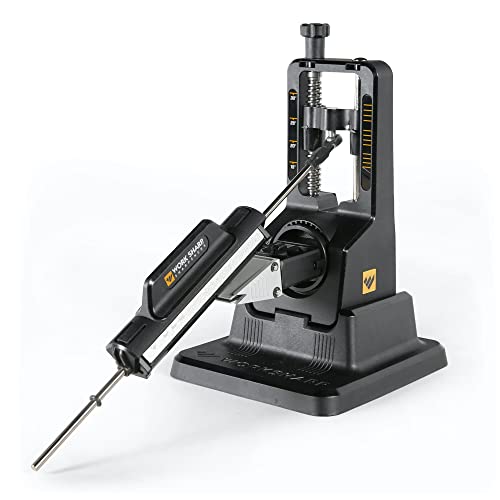
Whetstones function as flat abrasive blocks where the user manually draws the blade across the surface. This method offers direct control over pressure and angle, allowing for the removal of minimal steel per pass once the technique is mastered. However, this manual approach presents a significant learning curve. Beginners often fail to maintain the correct angle, which can result in excessive metal removal and a inferior edge compared to guided tools. A single stone set can accommodate various blade types, from kitchen knives to outdoor tools, providing a versatile option for those willing to invest time in skill development. Guided rod and clamp systems address the angle consistency issues inherent in freehand stone sharpening. These devices secure the blade in a fixed jig while an abrasive element moves across it at a locked, adjustable angle. This setup eliminates angle drift, offering most of the steel-efficient control of a whetstone without requiring years of practice. While these systems provide precision, they involve a bulkier and slower process than other methods. Clamping each knife individually consumes time, making them less suitable for high-volume sharpening tasks. Users can adjust the angle within a specific range to suit different cutting needs, balancing ease of use with sharpening quality.
Emerging Rolling Sharpeners and Field Tools
Rolling sharpeners, such as HORL-style devices, operate by rolling a disc abrasive along the blade edge while a magnetic or mechanical guide maintains a fixed angle. This design aims to eliminate the need for freehand angle holding while avoiding the aggressive cutting action typical of carbide V-slot sharpeners. The rolling motion helps distribute abrasive contact more evenly across the blade compared to single-pass pull-through methods. As an emerging format, these tools have gained consumer interest, though potential users should verify available angle settings before purchase. Compatibility with Japanese knife geometry can vary significantly between different models, so checking specific specifications is advisable. For field and pocket applications, portable options include diamond paddles, ceramic sticks, folding sharpeners, and compact pocket stones. These tools do not aim to replicate the results achieved with bench stones; instead, their purpose is to provide a functional edge while outdoors, on trails, or within a carry bag. Diamond-coated surfaces offer rapid material removal and are effective on harder steel types. Ceramic sticks serve to refine edges that are already near sharpness. In contexts like everyday carry or outdoor use, portability is generally prioritized over achieving the highest possible edge quality. These field tools focus on utility and convenience in mobile scenarios.
The Role of Honing Rods in Knife Maintenance
Honing rods serve a specific maintenance function distinct from actual sharpening tools. Their primary role is to realign the microscopic edge of a knife blade rather than removing metal to create a new sharp edge. This process helps maintain the knife's cutting performance between more intensive sharpening sessions. Many users incorporate honing into a regular routine, such as weekly, to keep blades in optimal condition. It is important to understand that a honing rod does not restore a truly dull blade. If a knife feels significantly dull, a proper sharpener or whetstone may need to reshape the edge. Honing is best suited for maintaining an already sharp edge, preventing it from rolling or misaligning during regular use. This practice can extend the overall life of the knife by reducing the frequency of aggressive sharpening. The benefits of using a honing rod include quick maintenance and cost-effectiveness. However, users should recognize its limitations regarding severely dull edges. For specific disassembly, electrical safety, or detailed maintenance procedures related to your particular knife model, consulting the manufacturer’s manual is recommended. Honing rods are a useful tool for ongoing care but are not a substitute for professional sharpening when necessary.
Frequently Asked Questions
How does material removal affect the lifespan of a knife blade?
Material removal refers to the amount of steel taken off a blade during sharpening. While removing more steel allows you to reach a sharp edge faster, it also shortens the overall lifespan of the blade. This is particularly significant for thin or expensive blades, which lose usable material more quickly with aggressive sharpening methods.
Why might a carbide pull-through sharpener damage Japanese-steel knives?
Japanese steels like VG-10 or SG2 are harder (62 HRC+) and more brittle. Carbide pull-through sharpeners apply aggressive abrasion at fixed angles (20–22 degrees), which do not match the thinner 15-degree grind of Japanese knives. This mismatch can fracture the edge apex, causing microchipping rather than refining the blade.
What is the primary difference between a honing rod and a knife sharpener?
A honing rod realigns a knife’s edge rather than sharpening it, serving as regular maintenance to keep blades in shape. A knife sharpener removes metal to restore a dull edge. Honing extends the time between sharpening sessions, while sharpening is recommended when the knife feels dull.
How do rolling sharpeners compare to manual pull-through models in terms of control?
Rolling sharpeners use a disc abrasive that rolls along the blade while a guide holds a fixed angle, distributing contact more evenly than manual pull-through models. Unlike pull-through sharpeners with fixed V-slots, rolling designs aim to eliminate freehand angle-holding needs, though they still operate at preset angles rather than offering adjustable control over edge geometry.
What advantage do guided-angle rod systems offer over freehand whetstones for beginners?
Guided-angle rod systems clamp the blade in a fixed jig, locking the abrasive rod at a specific angle. This design directly solves the angle drift problem beginners face with freehand whetstones, where hand-held strokes often wander off angle. Consequently, guided systems provide consistent edge geometry without requiring the extensive practice needed to master freehand stone technique.
Identify your knife type first, as serrated blades need specialized tools while straight edges work with most sharpeners. Then select a method matching your patience and budget, keeping in mind that honing rods maintain edges but do not restore dull blades. Choose between manual, electric, or stone options based on whether you prioritize speed, precision, or control.


